RTL Account: Creating a one-account solution for all RTL products
Millions of people used RTL Nederland's products, Videoland, Buienradar, and RTL's news and entertainment platforms, but each required a separate account: separate passwords, separate profiles, no way to move between products without logging in again. It also meant duplicated account infrastructure across teams and harder data management on RTL's side.
RTL Account was built to solve this: a single login system shared across every RTL product, replacing the patchwork of individual accounts with one identity that works everywhere.
Industry
Media / Weather
Company
RTL Nederland (RTL, Buienradar, Videoland)
Timeline
Collaboration
Development
IT & Security
Legal
Business
Customer care
Role
UX / UI Designer


Design challenges
Process & team
I was the sole designer on the Identity team responsible for RTL Account, working closely with a product owner and developers in an agile setup. I owned the design process end to end, wireframing, prototyping, testing and delivery, and pulled in stakeholders from Legal, Security, Business and Customer Care throughout, since identity changes touch nearly every part of the organisation. Handoff to developers included detailed specs and ongoing support through implementation, to keep the shipped product matching the design intent.


The solution
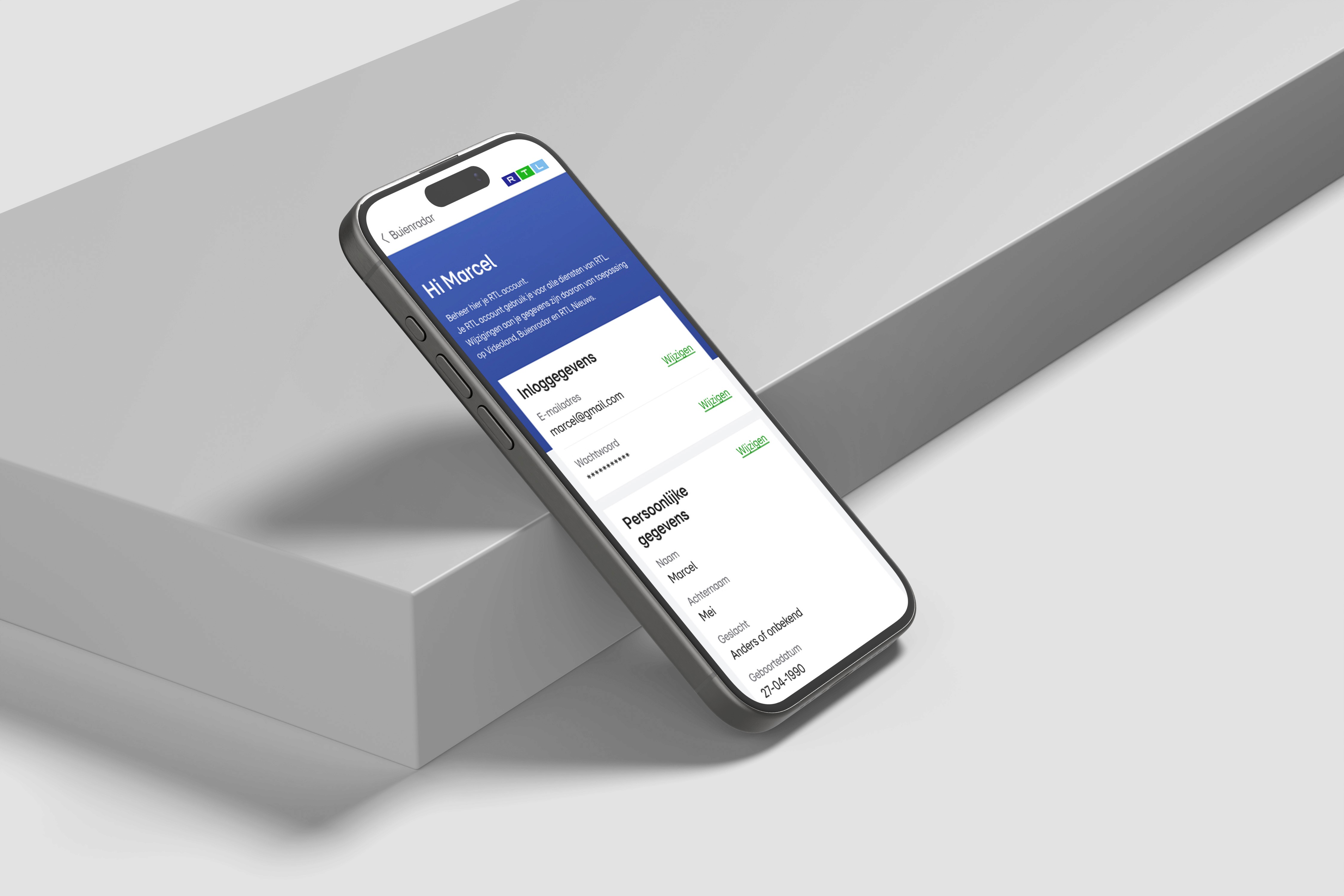
Rather than force one generic look onto every product, I designed a theming system: log in through Buienradar and you land in a Buienradar-themed RTL Account environment; log in through Videoland and the same flow feels native to Videoland. Users always know which product they're in, and it made scaling straightforward too, adding RTL Account to a new product became a matter of adjusting a colour palette, not rebuilding the flow.
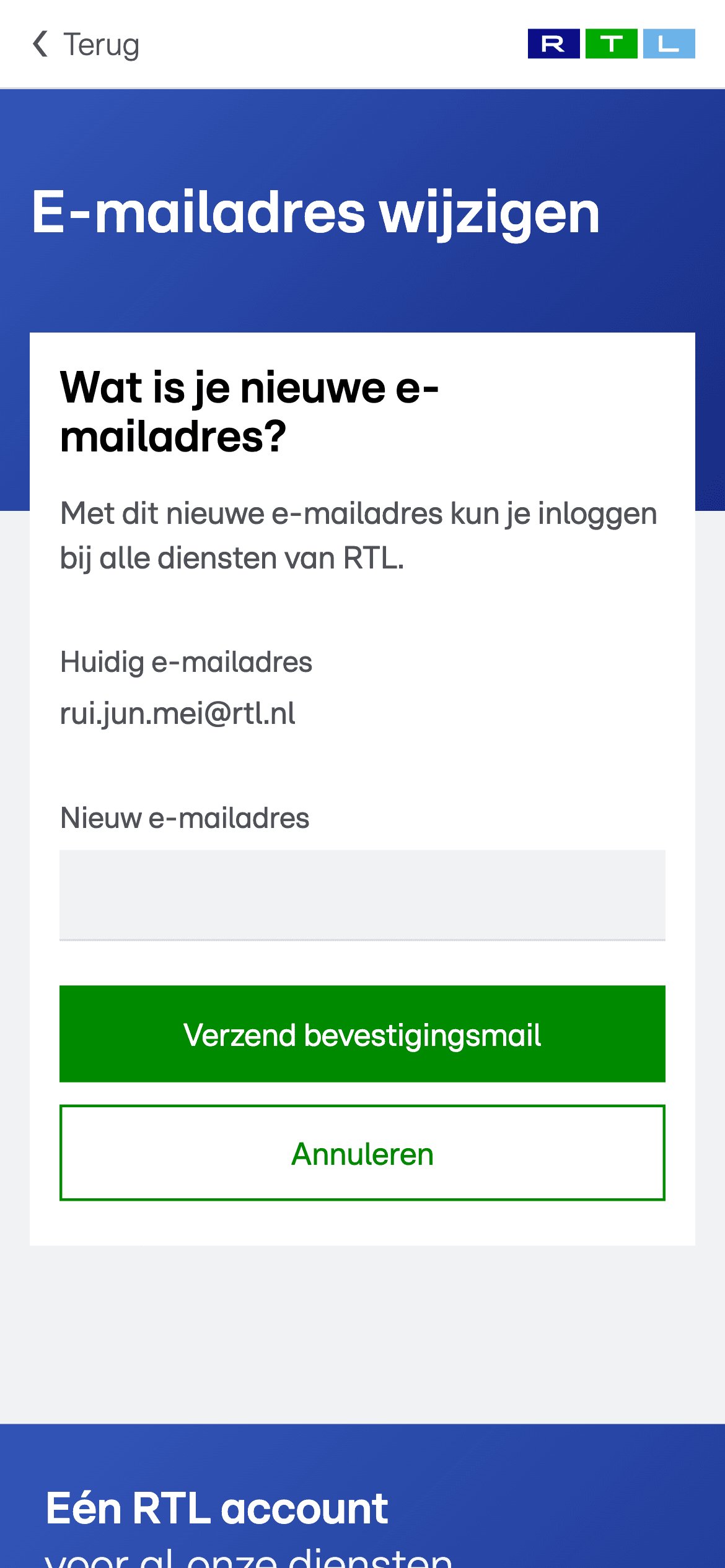
Underneath that, I built a design system defining the guidelines and rules for every flow inside RTL Account, so create-account, login and manage-account behaved consistently no matter which product a user arrived from.


Design system
I prioritised the design system deliberately, not as an afterthought squeezed in alongside feature work. Investing in it early paid off: it made every new flow faster to design and easier to keep consistent, and gave developers a stable, documented foundation to build from rather than reverse-engineering intent from individual mockups.


